

As we move further into 2026, the electronics industry continues to evolve rapidly. From smarter connected devices to increasingly compact hardware, the demands placed on printed circuit board assembly (PCBA) manufacturers are changing.
For design engineers, procurement teams, and product developers, staying ahead of these trends is key to ensuring efficient production, reliable performance, and long-term product viability.
In this article, we explore several key PCBA trends shaping the electronics industry in 2026 — and how A Squared Technologies, a family-run electronics manufacturer helps support these evolving needs.

1. Continued Miniaturisation of Electronics
Modern electronics are becoming smaller, lighter, and more powerful. This trend is particularly visible in sectors such as medical devices, consumer electronics, industrial automation and wearables.
To support these compact designs, PCBAs increasingly feature:
-
Higher component densities
-
Smaller surface-mount components
-
Advanced multilayer board designs
-
Tighter tolerances during assembly
Design for Manufacturability (DFM) is more important than ever. Considering assembly requirements early in the design phase can prevent production challenges and reduce costly redesigns.
How A Squared supports this trend
At A Squared Technologies, collaboration begins early in the product lifecycle. The team works with customers during design and prototyping stages, helping refine concepts before production begins. Their in-house Surface Mount Technology (SMT) assembly capabilities and automated pick-and-place machines allow accurate placement of small, high-density components required for modern compact electronics.

2. The Expansion of IoT Devices
The Internet of Things (IoT) continues to grow across industries, from smart homes and building systems to healthcare monitoring and industrial equipment.
This expansion creates new requirements for PCB assemblies, including:
-
Wireless connectivity
-
Low-power consumption
-
Compact hardware designs
-
High reliability for long-term operation
As many IoT devices operate continuously in real-world environments, reliable hardware and robust firmware are essential.
How A Squared supports this trend
Beyond hardware assembly, A Squared Technologies also supports embedded software and firmware development, enabling connected devices to communicate via technologies such as Wi-Fi, Bluetooth, Ethernet or local radio communications. This integration of electronics design, software and manufacturing helps bring connected products from concept through to production.

3. Sustainability in Electronics Manufacturing
Sustainability is becoming a priority across the electronics supply chain. Manufacturers and product developers are increasingly considering environmental impact throughout the lifecycle of electronic devices.
Areas of focus include:
-
Efficient manufacturing processes
-
Reducing production waste
-
Extending product lifespan
-
Designing reliable electronics that minimise rework and failure
How A Squared supports this trend
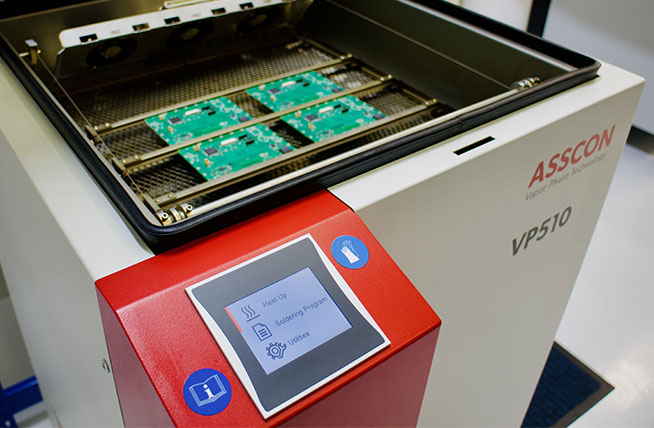
Quality and reliability are central to sustainable electronics manufacturing. A Squared follows internationally recognised IPC manufacturing standards and uses modern soldering technologies — such as vapor phase soldering — that deliver consistent heat distribution and reliable solder joints across complex assemblies. These processes reduce defects and rework, improving overall manufacturing efficiency and product longevity.
4. Greater Emphasis on Supply Chain Resilience
In recent years, global electronics supply chains have experienced disruption due to component shortages and logistics challenges. As a result, companies are increasingly prioritising resilient and transparent supply chains.
Common strategies include:
-
Working with trusted manufacturing partners
-
Maintaining strong supplier relationships
-
Identifying alternative components where possible
-
Building closer collaboration between design and production teams
How A Squared supports this trend
A Squared Technologies manages component sourcing and procurement in-house, working with trusted suppliers and offering alternative parts when components are difficult to obtain or have long lead times. Their long-standing relationships with component suppliers also help maintain reliability and shorter manufacturing lead times for customers.

5. Increased Demand for Testing and Quality Assurance
As electronics become more complex and are deployed in mission-critical environments, robust testing and inspection processes are essential.
Modern PCBA production increasingly relies on:
-
Detailed inspection during assembly
-
Functional testing
-
In-circuit testing
-
Compliance with industry standards
How A Squared supports this trend
Quality control is embedded throughout the manufacturing process at A Squared. Their team of IPC-certified specialists follows strict electronics assembly standards, carrying out inspection and testing procedures to ensure each board meets customer requirements before delivery. This approach helps identify issues early and ensures reliable performance in the final product.

Preparing for the Year Ahead
The electronics industry shows no signs of slowing down, and the trends shaping 2026 highlight the importance of careful planning, collaboration and quality-focused manufacturing.
Working with an experienced partner like A Squared Technologies means businesses can benefit from support across the entire product lifecycle — from concept and design through prototyping, software development and full production. This collaborative approach helps companies bring innovative electronic products to market efficiently and reliably.
For organisations planning new electronics projects this year, understanding these trends — and working closely with a capable PCBA partner — can help ensure products are built for the demands of the modern electronics landscape.